
Unusual Things to Do in Madrid: 7 Plans That Aren't in Your Guidebook
Publicado el
You have done the Prado. You have queued for the Royal Palace, taken the photo at Plaza Mayor and eaten the churros at San Ginés at two in the morning. All of it was worth it. But by day three in any capital city there comes a moment when you want something that the guidebook didn't hand you — and that is exactly when people start searching for unusual things to do in Madrid.
Here is the good news: Madrid is unusually good at this. It is a city that hides a working royal tapestry factory behind an unremarkable door, that turned a nineteenth-century railway station into a museum you can walk through, and that will happily sell you an evening throwing axes or painting under ultraviolet light. None of it is on the standard three-day itinerary. All of it is twenty minutes from Sol.
We have put together seven genuinely unusual plans in Madrid, with addresses, opening hours, prices where they are published, and a note on whether you can actually do each one in English — which, if you don't speak Spanish, is the detail that decides everything. Three of them are ours. We'll tell you which.
The 7 plans at a glance 📋
Real Fábrica de Tapices — a royal tapestry factory still weaving since 1721
Urban Safari — axe throwing with a bar attached
Museo del Ferrocarril — a railway museum inside the station itself
Experiencity Express Train — dinner and a mystery inside a train carriage
Casa Museo Lope de Vega — a Golden Age writer's house, free, guided tour only
Tinto y Tinta — painting under UV light with a drink in your hand
Museo Geominero — a cathedral of minerals that almost nobody visits
Unusual things to do in Madrid, one by one 🗺️
1. Real Fábrica de Tapices: a royal factory that never stopped working
Most European capitals have turned their royal workshops into museums. Madrid didn't. The Real Fábrica de Tapices has been weaving since 1721 and it is still weaving now — the same looms, broadly the same techniques, with restorers and weavers working in front of you rather than behind glass.
You cannot simply wander in, and that is part of why almost no tourists do. Access is by guided tour only, in small groups, on weekday mornings. What you get in exchange is the rare experience of a workshop that smells of wool and wood, where someone will explain how a Goya cartoon became a tapestry and how long one square metre takes. The answer will reset your sense of what handmade means.
The tours run in Spanish and in English, which makes this one of the easiest plans on this list for a visitor who speaks no Spanish at all. Book ahead: the slots are limited and the factory keeps short hours.
📍 Location: C/ Fuenterrabía 2, 28014 Madrid
⏱️ Open Monday to Friday, 10:00–14:00, with guided tour slots from 10:00 to 13:00
🔗 Book at Real Fábrica de Tapices
Call ahead and ask for an English tour slot — it is the single most unusual hour you will spend in Madrid.
2. Urban Safari: throwing axes, and discovering you are good at it
This is one of ours, so take the enthusiasm with the appropriate pinch of salt — but axe throwing really is the thing visitors least expect to find in Madrid, and the one they talk about afterwards. You get a lane, a target, and an instructor who teaches you the throw, runs you through the safety rules and then starts inventing competitions once you can land the blade reliably.
What makes it work as a travel plan rather than just an activity is the format. A session lasts an hour, which fits into an afternoon without eating it, and there is a bar inside — soft drinks, beer, wine, mead — so the group that is not throwing is not standing around bored. In your first session you will try up to four different axes and throwing objects.
Sessions run in English, and the venue is in Delicias, a working Madrid neighbourhood rather than a tourist strip. That matters for the next entry on this list, because the railway museum is a ten-minute walk down the same street.
📍 Location: Calle de las Delicias 9, Madrid
⏱️ Duration: 60 minutes for the classic session (two-hour sessions also available)
👥 1 to 45 players
💰 Price: from €16
🔗 Book axe throwing at Urban Safari
Book an afternoon lane, then walk down to the railway museum afterwards — it is the best-value half day in southern Madrid.

3. Museo del Ferrocarril: a station that became a museum without changing
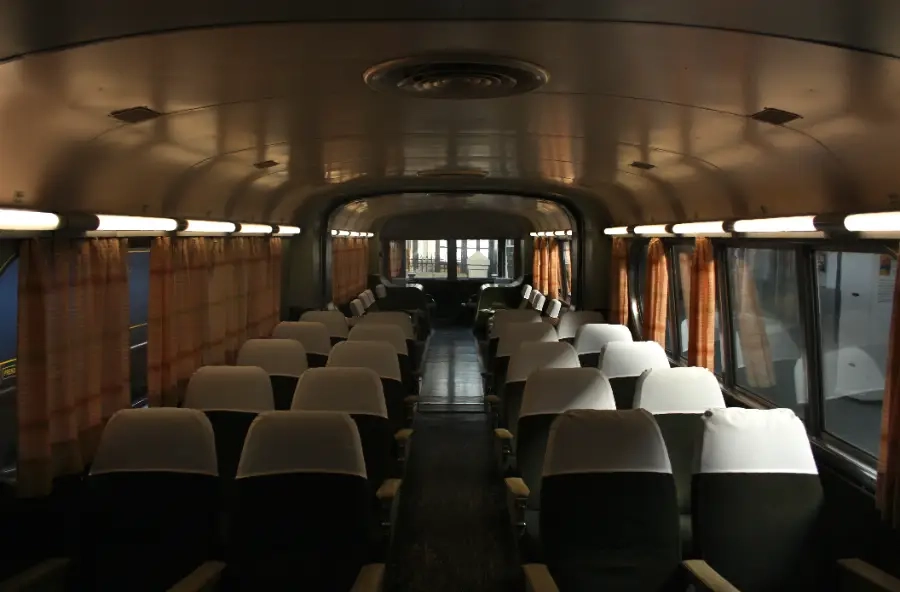
Photo: Sneeuwvlakte, CC BY-SA 4.0, via Wikimedia Commons.
Madrid's first big railway station opened at Delicias in 1880 and closed to passengers in 1969. Instead of knocking it down, somebody had the sense to leave the iron-and-glass trainshed standing and park the locomotives back underneath it. The result is a museum where the building is as much of an exhibit as the collection.
You walk in under the original roof and the trains are simply there, on the original tracks, close enough to touch. Steam engines, royal carriages, sleeping cars you can climb into. It is the kind of place that disarms people who were certain they had no interest in trains, and it is wonderful on a hot afternoon or a wet one, because almost all of it is under cover.
A note for planners: the hours change between seasons, and on weekdays from October to May it closes at 15:00. Check before you set off.
📍 Location: Paseo de las Delicias 61, 28045 Madrid
⏱️ October to May: Monday to Friday 9:30–15:00, Saturdays and public holidays 10:00–19:00, Sundays 10:00–15:00. June to September: daily 10:00–15:00
🔗 Check times at Museo del Ferrocarril
Go on a Saturday if you can — it is the only day the museum stays open into the evening.
4. Experiencity Express Train: dinner inside a train carriage, with a mystery to solve

Ours again, and it is the one that needs the least explaining once you see it. You are seated inside a themed railway carriage — there are nine of them, from an Irish pub to a New York diner to a Polynesian route — you are served a full meal, and across the two and a half hours you have to solve the puzzles hidden around you. It is a restaurant and an escape room at the same time, and neither half is an afterthought.
It works unusually well for travellers because it solves dinner and the evening's entertainment in one booking. You are not eating quickly in order to get to the thing you booked afterwards; the eating is the thing. And because the carriages are small — two to eight people — it never feels like a coach tour.
The experience runs in English. Book ahead, because each carriage only seats one group at a time and weekends fill up.
📍 Location: Calle Vicente Espinel 12, Madrid
⏱️ Duration: 150 minutes
👥 2 to 8 travellers per carriage
🔗 Book Experiencity Express Train
Pick the carriage by the cuisine you most want to eat — the puzzles are good in all of them, but you will be eating that menu for two and a half hours.
5. Casa Museo Lope de Vega: the writer's house that survived the city
Lope de Vega wrote something like eighteen hundred plays, which makes him Spain's Shakespeare with a considerably more alarming work rate. He bought this house on the street that is now called Cervantes, lived in it for the last twenty-five years of his life, and wrote a large part of that output here.
The house survived, and what makes it unusual is that it has been furnished back to how an educated man of the 1620s would actually have lived: the study, the kitchen, the oratory, the small walled garden out the back that is the quietest place in the Barrio de las Letras. Entry is free, and you can only go in on a guided tour in groups of no more than fifteen, which keeps it from ever feeling like a museum queue.
Book in advance. Individual visitors are explicitly advised to reserve, and with fifteen places per tour the slots go.
📍 Location: C/ Cervantes 11, 28014 Madrid
⏱️ Tuesday to Sunday, 10:00–18:00. Closed Mondays, 1 and 6 January, 1 and 15 May, and 24, 25 and 31 December
💰 Price: free
🔗 Reserve at Casa Museo Lope de Vega
Reserve a morning slot and walk out into the Barrio de las Letras afterwards — the quotes set into the paving outside are from the writers who lived on those streets.
6. Tinto y Tinta: a canvas, a glass and ultraviolet light
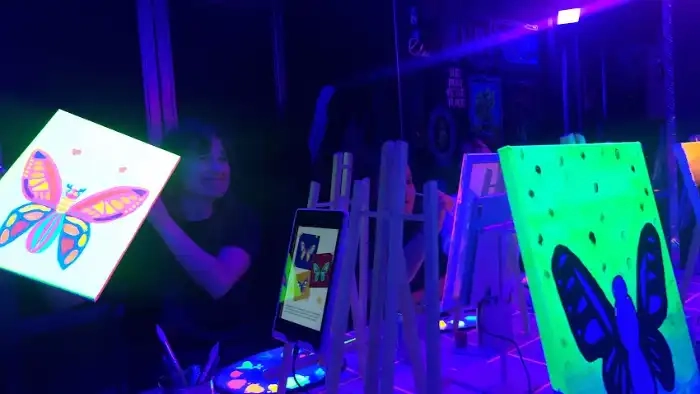
The third of ours. The premise is simple enough to explain in a sentence: you sit down in front of a blank canvas with everything supplied — easel, brushes, paints — with unlimited drinks and with the lights switched to ultraviolet, so the paint glows while you work. Two and a bit hours later you walk out with a painting.
The reason it belongs on a list of unusual things to do in Madrid is that nobody is assessing you. There is no skill requirement and no instructor hovering to correct your technique. The session even opens with a short escape-room puzzle to break the ice before anyone picks up a brush, and there are photo spots between the easels.
There are two venues in Madrid, one in Delicias and one by the Retiro, both running in Spanish and English, and it is open from age eight, which makes it one of the few plans here that works with a teenager in tow.
📍 Location: Calle Tomás Borrás 2 (Delicias) and Calle Narciso Serra 15 (Retiro)
⏱️ Duration: 135 minutes
👥 Up to 16 people in Delicias, up to 26 in Retiro
🔗 Book Tinto y Tinta
Take the Retiro venue if you are staying near the park and the Delicias one if you are combining it with the axe throwing — they are on the same street.
7. Museo Geominero: the most beautiful room in Madrid that nobody tells you about
If you only do one thing from this list, consider this one, because it costs nothing and it takes half an hour. The Museo Geominero occupies a hall on the first floor of the Geological Survey building on Ríos Rosas: three storeys of iron galleries around a central void, a stained-glass roof overhead, and the original nineteenth-century wooden display cases still full of minerals and fossils.
It is, straightforwardly, one of the most beautiful interiors in the city, and because it is a scientific institution rather than a tourist attraction it is almost always empty. You can stand in the middle of it on a Saturday morning with nobody else in the room.
Two practical notes. It closes at 14:00 every day, so it is a morning plan, not an afternoon one. And the labelling is in Spanish, so treat it as a building to look at rather than a collection to read.
📍 Location: Ríos Rosas 23, 28003 Madrid
⏱️ Daily, 9:00–14:00, including public holidays. Closed 24, 25 and 31 December and 1 and 6 January
💰 Price: free
🔗 Check before visiting at Museo Geominero
Put it first thing on a morning you are heading north anyway — thirty minutes, no ticket, and the best ceiling you will see all trip.
How to fit these into a Madrid trip 🧭
The thing these seven have in common is that none of them needs a full day, which means you can slot them around the big-ticket sights rather than instead of them.
Geography helps more than you would expect. Urban Safari, the Museo del Ferrocarril and the Delicias branch of Tinto y Tinta are all within a short walk of each other, down the Paseo de las Delicias in the south of the city, which makes a genuinely full afternoon out of three things you would otherwise never have found. The Real Fábrica de Tapices sits just east of Atocha, so it pairs with the station and the Reina Sofía. Casa Museo Lope de Vega is in the Barrio de las Letras, five minutes from Sol. The Museo Geominero is the outlier to the north.
The other pattern worth noticing is timing. Three of these close at or before 15:00 — the tapestry factory, the Geominero and the railway museum on weekdays — while the three of ours run into the evening. If you build your day with the free, short, morning-only things first and book the longer experiences for the evening, you will not waste an afternoon standing outside a locked door.
A note on language: what you can actually do in English
This is the question that decides a trip, and it is rarely answered clearly, so here it is plainly. The Real Fábrica de Tapices runs guided tours in Spanish and in English, and all three of our experiences — the axe throwing, the train carriages and the painting sessions — run in English as standard, with English-speaking staff.
The Museo Geominero and the Museo del Ferrocarril are walk-in collections whose labelling is mostly in Spanish; neither needs language to enjoy, but do not expect an English audio guide. At Casa Museo Lope de Vega the visit is by guided tour and there is an English leaflet, but we could not confirm that English-language tours run on a regular schedule — call or email before you book if that matters to you.
Frequently asked questions ❓
What are the most unusual things to do in Madrid when it rains?
Almost everything on this list is indoors, which is not an accident — Madrid in a downpour sends everyone into the same three museums. The railway museum is the standout, because the old trainshed is covered and vast, and the Museo Geominero is free, warm and takes half an hour. For the evening, the Experiencity Express Train carriages and the Tinto y Tinta painting sessions are entirely indoors and last long enough to sit out a storm.
Can I do these activities in English?
Three of the seven are confirmed to run in English: axe throwing at Urban Safari, the Express Train carriages and Tinto y Tinta. The Real Fábrica de Tapices states that its guided tours are offered in Spanish and English. The two free museums are self-guided with Spanish labelling, and at Casa Museo Lope de Vega we would check before booking.
Are these unusual Madrid activities suitable for teenagers?
Several are. Tinto y Tinta is open from age eight and is the easiest sell to a teenager who has had enough of churches. Urban Safari takes players from one to forty-five and runs dedicated younger sessions. The railway museum works for most ages. The tapestry factory and the Lope de Vega house are guided tours of about an hour and are a harder ask for a bored fifteen-year-old, although both are short.
How far in advance should I book?
For the free, ticketless ones — the Geominero and the railway museum — you can turn up. Everything else should be booked. The Real Fábrica de Tapices and Casa Museo Lope de Vega run small guided groups with limited slots, and both explicitly recommend reserving. For our three, weekends and public holidays fill first, so a few days ahead is usually enough outside August and the Christmas period.